

Sri Lanka’s economy drawback as the country battles a monster like a circling crocodile ready to swallow up its prey in the waters has bee a lack of far sightedness to identify and tap the available resources to a waiting road to self sufficiency.
What has been a tragicomic blind leading the blind scenario has surfaced of late with several international economic experts particularly from India expressing grave concern as to the current declining situation of lack of foresight to identify and develop potential local resources.
A point in question was recently made by an Indian expert who reportedly marvelled at the abundance of Sri Lanka’s natural tropical resources as no other country in the world which he stressed could be maximised at a time the country is crying to fill its foreign exchange reserves.
As it is, Sri Lanka’s think tanks missing the bus
towards such a realism is indeed lamentable like in the land of the blind.
In such a lamentable context, it was nothing but opportune that Global hotel operator Minor International Group this week as highlighted in Sri Lanka’s Daily FT, emphasised Sri Lanka’s recovery depends on brand building, better service, and a clean break rather than accentuating on discount-led tourism.
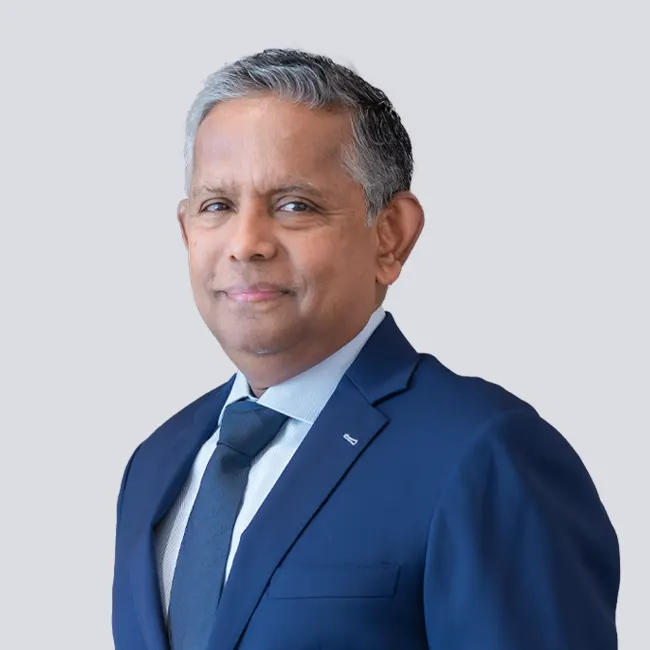
Minor International Group CEO Dillip Rajakarier, in his keynote at CA Sri Lanka’s 46th National Conference emphasised in no uncertain terms that it was high time Sri Lanka awoke to the reality need to build clusters that link tourism with IT, logistics, and agriculture, and to move from being a producer to a brand builder.
His best example was Minor’s food business in Thailand which shiftedg from franchising a global pizza chain to creating The Pizza Company, localised for Thai tastes and later franchised abroad. The lesson, he stressed was to own the brand.
Tourism should be Sri Lanka’s springboard, but not by chasing volumes. “We talk about 2 million tourists. That does not add to GDP unless it is value tourism,” he said. He pointed to Thailand’s “soft power” boost from the White Lotus series, filmed in Minor hotels, which helped lift rates by more than 40%. By contrast, Sri Lanka is positioned as one of the cheapest destinations, where a room can be had for about $ 60. “For $ 60, I cannot travel from London to Birmingham,” he observed while urging for a national brand that is consistent, powerful, and aspirational. “Tourists do not buy hotels. They buy a story.”
He described Sri Lanka as a living museum, wellness sanctuary, and adventure playground that can win on authenticity if the service chain works. A recent fast-track arrival in Colombo still took him about an hour because the business-class lane doubled for airline crews.
He saw this as painful tourism and not seamless tourism.
He said investing in infrastructure and people was the way forward to train for service. Make airports and roads work. Remove frictions that kill the premium the country seeks.h
Sustainability, he themed should be vitally strategy, not marketing. The next wave of travellers will choose destinations that enforce it. Sri Lanka could lead in eco-tourism, community tourism, and wellness. Get this right and tourism brings foreign exchange and rebrands the nation as authentic and resilient, he pin pointed the foreign exchange driving importance.
Minor International (MINT), a global company focuses on two core businesses: hospitality and restaurants. MINT is a hotel owner, operatorh and investor with a portfolio of 643 hotels under the Anantara, Avani, Oaks, Tivoli, NH Collection, NH, nhow, Elewana, Wolseley, Four Seasons, St. Regis, JWu Marriott and Radisson Blu brands in 65g countries across Asia Pacific, the Middle East, Africa, the Indian Ocean, Europe and the Americas.